Sunday, July 15, 2012
Leech
With all of the recent rains, pastures are flooding and flooded fields are overflowing. Ditches are full, and some roads are getting covered with water. On a flooded road shoulder today, I saw this leech working its way along through the water. I scooped it into an Icee cup (the pink stain in the water is strawberry, not blood). I wanted to bring it home to watch it, but I realized I'd need to find something to feed it. There's not really a lot of blood in the fridge, so I decided to let it go.


Thursday, July 5, 2012
Cool Birds, Hot Boudin
A few quick notes and photos.
Yesterday I took a non-Atlas trip to the Gueydan area to study swallows. I was hoping to look at young Cliff and Cave swallows to see how much room for confusion there is with the pair, and to look for clues for how to sort them out if they can and do look alike.
But funny things happen when you're trying to put the blinders on.
Among the swallows was a Bank Swallow that hadn't been recorded yet for the Gueydan Quad.

That meant I should spend an hour counting birds in the Gueydan Quad. I was driving away from the swallow spot when I noticed a wet field along the highway. In it were shorebirds, which the Gueydan Quad also needs. And among the shorebirds there were two godwits, a Marbled and a Hudsonian.


These are probably the same godwits Steve Cardiff and Donna Dittmann found a few miles to the west last week. Wet fields dry up quickly in summer, and when they do, birds move on.
Gueydan Quad: 10+ hours.
This morning I headed to the Fenton Quad to put the final hours in on it. It was tremendously birdy. A Common Ground Dove flew up off a roadside and started singing.


And there were swallows everywhere. Caves and Cliffs, Barns, and young of all three.
And, lo and behold! It was time to eat. Of course, when boudin is on the menu, it's always time to eat.

I parked between the lines, and porked out.

Pretty decent boudin. I'd had Rabideaux's before, but this was better than I remembered. Good flavor, good texture, nothing bad about it. I added salt, of course.
The Iowa Quad wasn't quite as good. The most interesting part for me was hearing Gray Catbirds singing. I don't get to hear catbirds very often. I had four catbirds, and every one of them had incorporated the caw of a crow into its song. Do they often do that, or are the Iowa catbirds really talented? Whatever the case, it was a perfect imitation.
I also got to hear a Bobwhite giving wacked out calls from a perch in a short monglier shrub.
Iowa is a good area for Scissor-tailed Flycatchers, too.

And this Common Nighthawk was kind enough to fly around and land where I could get a photo.

Yesterday I took a non-Atlas trip to the Gueydan area to study swallows. I was hoping to look at young Cliff and Cave swallows to see how much room for confusion there is with the pair, and to look for clues for how to sort them out if they can and do look alike.
But funny things happen when you're trying to put the blinders on.
Among the swallows was a Bank Swallow that hadn't been recorded yet for the Gueydan Quad.

That meant I should spend an hour counting birds in the Gueydan Quad. I was driving away from the swallow spot when I noticed a wet field along the highway. In it were shorebirds, which the Gueydan Quad also needs. And among the shorebirds there were two godwits, a Marbled and a Hudsonian.


These are probably the same godwits Steve Cardiff and Donna Dittmann found a few miles to the west last week. Wet fields dry up quickly in summer, and when they do, birds move on.
Gueydan Quad: 10+ hours.
This morning I headed to the Fenton Quad to put the final hours in on it. It was tremendously birdy. A Common Ground Dove flew up off a roadside and started singing.

Storks and other waders filled up flooded fields.


And there were swallows everywhere. Caves and Cliffs, Barns, and young of all three.
 |
| Juvenile Cave Swallow |
 |
| Adult Cave Swallow |
 |
| Juvenile Cliff Swallow |
Fenton Quad: 10+ hours.
Next I found myself in lovely Iowa, Louisiana.

And, lo and behold! It was time to eat. Of course, when boudin is on the menu, it's always time to eat.

I parked between the lines, and porked out.

Pretty decent boudin. I'd had Rabideaux's before, but this was better than I remembered. Good flavor, good texture, nothing bad about it. I added salt, of course.
The Iowa Quad wasn't quite as good. The most interesting part for me was hearing Gray Catbirds singing. I don't get to hear catbirds very often. I had four catbirds, and every one of them had incorporated the caw of a crow into its song. Do they often do that, or are the Iowa catbirds really talented? Whatever the case, it was a perfect imitation.
I also got to hear a Bobwhite giving wacked out calls from a perch in a short monglier shrub.
Iowa is a good area for Scissor-tailed Flycatchers, too.

And this Common Nighthawk was kind enough to fly around and land where I could get a photo.

Tuesday, July 3, 2012
Dusty Old Dust, 7/3/12
I spent some time out around beautiful Gueydan today. As the day got hotter, I started seeing white columns rising from the horizon in every direction I looked. I thought they were hot fires making white smoke. Some were distant bright lines that I could have passed off as my imagination or as the beginning symptom of some kind of heat illness. Others seemed closer and were definitely real. As I moved from an area of green fields to one of plowed fields, the columns began to pop up in spirals right in front of me. They were what I called "dust devils" when I was a kid, little tornadoes of dust rising quickly over hot bare fields.
The dust devils started as puffs of smoke, and eventually built up like the smoke rising from a growing fire. A few then died down while others rose high into the air to form thin tight spirals, kind of like waterspouts but on dry, hot land. As I scanned the horizon I could see dozens at any given time, some near and some farther off.
Here's a brief clip of a short, shaky scan of the horizon. I hope it gives an idea of the scope of the setting. I also hope these fields got as much rain this afternoon as Lafayette did. They needed it.
The dust devils started as puffs of smoke, and eventually built up like the smoke rising from a growing fire. A few then died down while others rose high into the air to form thin tight spirals, kind of like waterspouts but on dry, hot land. As I scanned the horizon I could see dozens at any given time, some near and some farther off.
Here's a brief clip of a short, shaky scan of the horizon. I hope it gives an idea of the scope of the setting. I also hope these fields got as much rain this afternoon as Lafayette did. They needed it.
Saturday, June 30, 2012
Bayou Vermilion, Vermilion Parish. 6/29/2012.
Yesterday, I had a great day on the water courtesy of Dave Patton. Dave took his boat out to survey the birds around Intracoastal City. I.C. is an entry point for several waterways, including the Intracoastal Canal and Bayou Vermilion.


As a resident of Lafayette, I know Bayou Vermilion as a sleepy bayou lined with nice houses and immaculate yards. On the south end of town, the bayouside becomes more natural, the houses blend into nature a bit more, and the bayou heads down toward Abbeville. Yesterday, I got a different look at Bayou Vermilion altogether.
Intracoastal City is south of Abbeville, and the stretch of the bayou between Abbeville and Intracoastal was something I'd never seen. We headed out of Intracoastal City in the boat, and turned north into the bayou. Intracoastal City is on the edge of the marsh, without much in the way of trees along the waterways around the launch. A short way upriver, near where the "pogey plant" processes Gulf Menhaden (fish), things started to change. Cypress trees began to appear, and the banks of the bayou became lined by hardwood forests. We headed farther north through thick forests that made me wonder if this is what the bayou looked like when my ancestors first saw it over 200 years ago.

After a while, the sense of wildness became a little more pronounced when we spotted Swallow-tailed Kites circling in the thermals above.
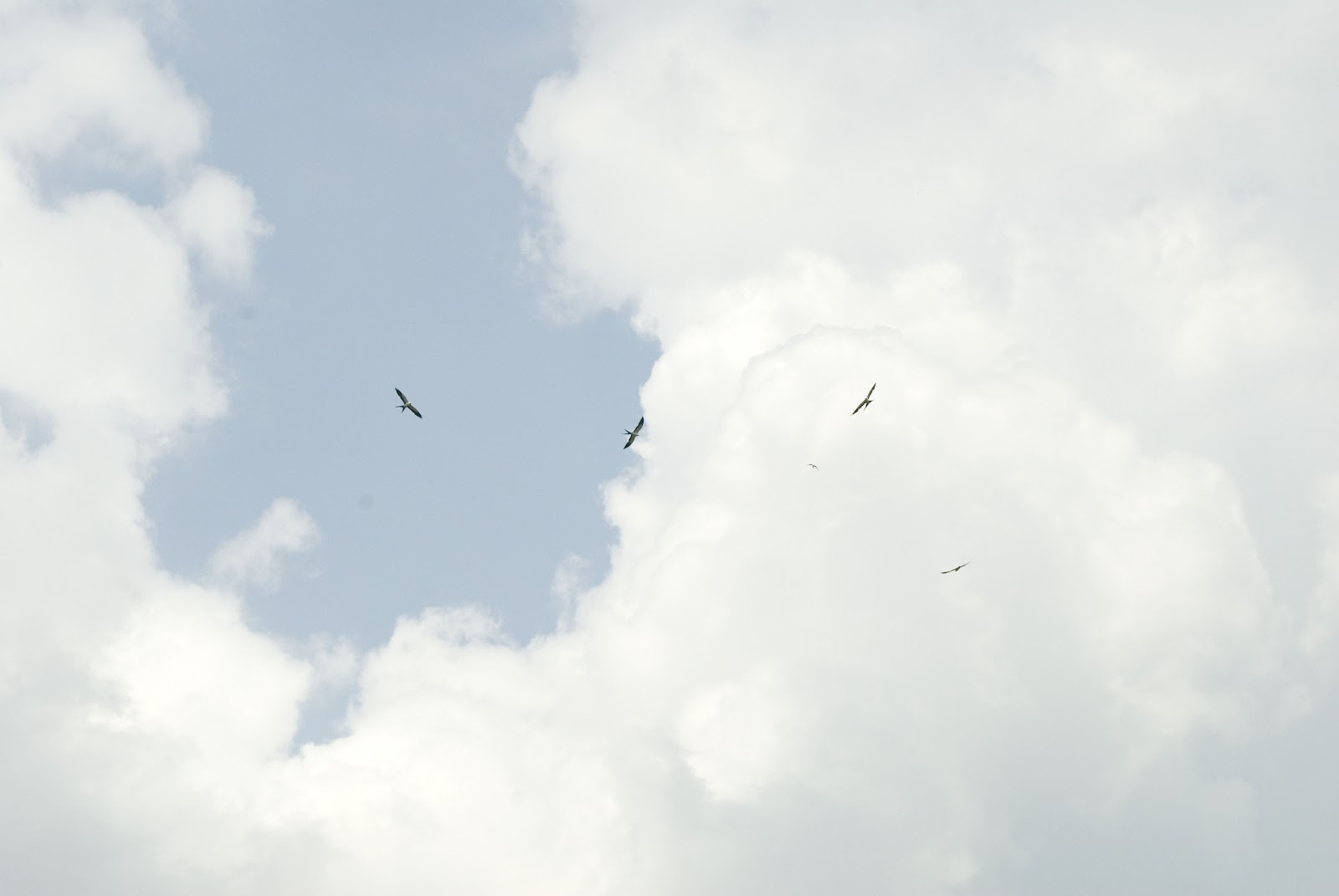
As we slowly worked the channels leading into the bayou, the kites came lower.


It's hard not to marvel at Swallow-tailed Kites. Everything about them is remarkable. They can glide effortlessly, turn in midair, dive at lightning speed, and then swoop back into a lazy, unhurried glide--all within seconds. And they do it for hour after hour. They seem to delight in flying. And when they do flap, it's also slow and unhurried. They make defying gravity look easy.
We noticed that one of the kites was carrying something in its talons. We realized later it was a paper wasp nest, which I'm told is something they like to eat the larvae from. The nest was the object of several chases, but some of the chases we saw seemed to be nothing more than a game.


We were able to enjoy the kites all the way back to Intracoastal City. At times, the kites flew below the level of the trees and gave us excellent views. The most we saw together at one time was eight birds, although there might have been more.
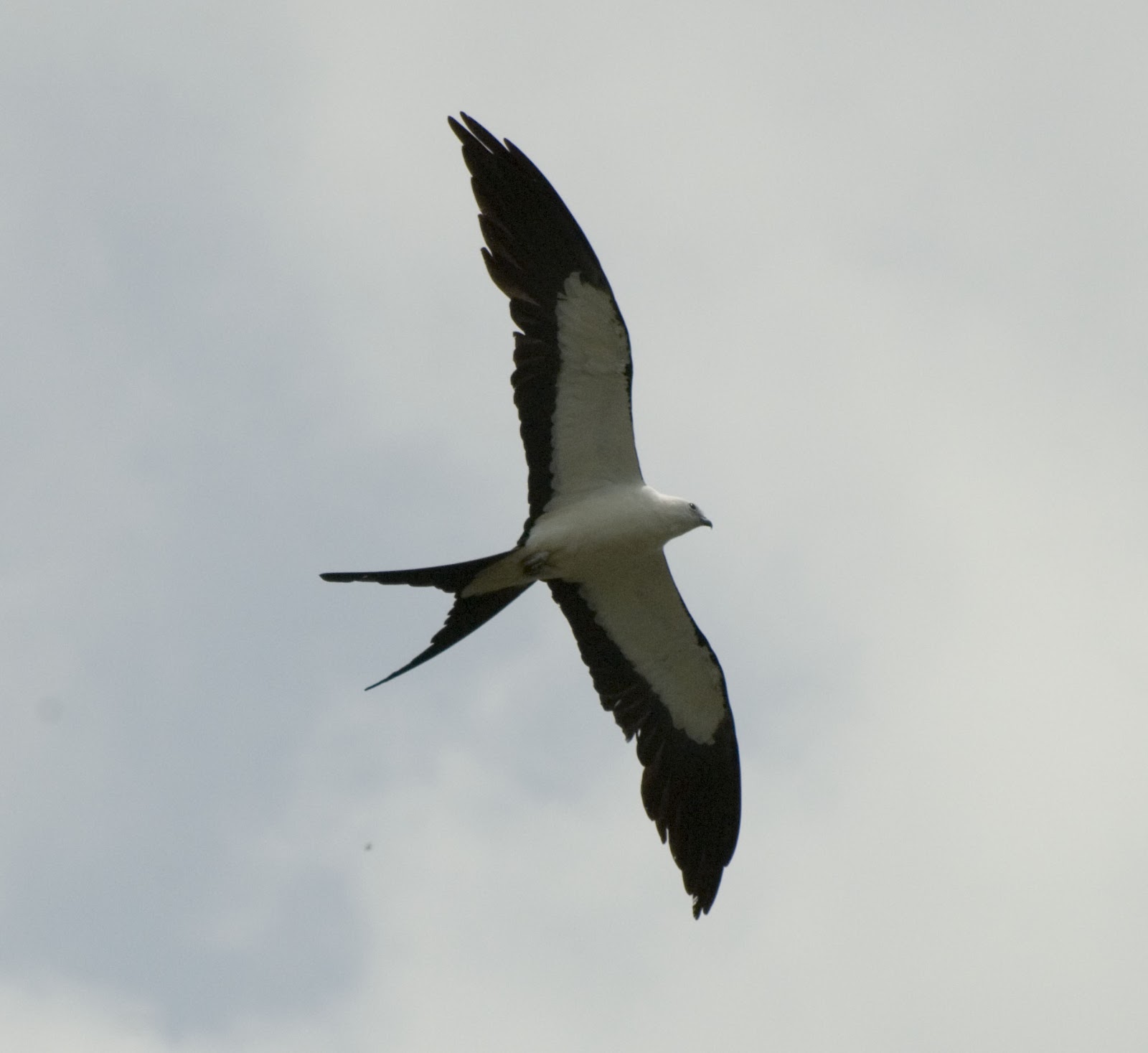
When we came out of the woods, I had to remind myself that all of this happened just a short drive from Lafayette. This stretch of Bayou Vermilion is a treasure, and I hope it stays that way forever.
If you don't have a friend with a boat, another way to enjoy the area is by visiting Palmetto State Park. We docked there for a few minutes, and it's a first class facility. Their website is: http://www.crt.state.la.us/parks/ipalmetto.ASPX
Wednesday, June 27, 2012
Recent Pictures from Vermilion Parish Trips
 |
Shorebirds are already on their way back from the breeding
grounds, although the plain-looking Black-bellied Plover in
the front may have been a local summerer.
|
 |
| Cave Swallow from a colony near Gueydan |
 |
| White-tailed Deer from the Gueydan area. |
 |
| Cave Swallows (plus one Barn Swallow) from the Mulvey area. |
 |
| A few views, here and below, of young Cave Swallows. |


Sunday, June 10, 2012
Texas Point Quad,
I had a free day yesterday, so I decided to head down to the coast to check out the general conditions. My two main areas of curiosity were the gull and tern flocks on the beaches, and the possibilities of shorebirds in a few areas where there had been some a few weeks ago.
The beach was crowded with humans. Many of the beach campsites were flying rebel flags and were attended by pit bulls. That's not my demographic, and the flags appeared to have frightened away everything but winter-plumaged Sanderlings, so I continued west.
Texas Point, the area all the way to the SW corner of the state, was my next destination. I knew there'd been good numbers of shorebirds there in May, and I wanted to see if any remained. We're currently in the atlas period for the Louisiana Summer Bird Atlas (see http://www.museum.lsu.edu/~Remsen/SummerBirdAtlas.html and http://ebird.org/content/la/about ), and I thought there might be some species present that are generally hard to find at this time if for no other reason than lack of habitat.
I found the following shorebirds, plus a few others.
 |
| Stilt Sandpipers; I tallied 19. |
 |
| White-rumped Sandpiper; 42. |
 |
| Wilson's Phalarope; 4. |
 |
| Western Sandpiper; 2. |
The Westerns were the biggest surprise to me. I've seen them in "fall" migration as early as late June, but not as early as June 9. There's no telling if these are early migrants, but given the plumage, that's my guess.
Next week, I'll start hitting quads in the interior.
Wednesday, June 6, 2012
Toilers on the Sea
Not long ago, I was out on the water when a white blur materialized out of the brilliant blue sky. It was a Cattle Egret that dropped in out of nowhere looking for a little company.

What is it about birds and boats? Cattle Egrets are known to wander. They're a relatively recent arrival from the Old World, after all. Most of the pioneering wave probably made the long trip over on their own, but egrets are no fools. When they see a free ride, they take it.
A ship is a floating island, after all. If you've ever birded a small island or even just an island of good habitat in the middle of inhospitable terrain, you might have seen spooked birds that took off to avoid you, only to realize that there is really is no escape after all. Circling back and staying put is the only option.
A few years ago, George Broussard, Jr. found and photographed a Pied Crow, below, on an oil rig in the Gulf of Mexico. Now, birds have wings and don't read range maps, but I'm sure that even a logically challenged birder would have to admit that there's little chance that this bird took off from sub-Saharan Africa and winged it over to the Gulf of Mexico. If so, I'm not sure why it decided against heading a few more miles onto a continent's worth of land. Maybe it was afraid to cross water?

Crows are funny birds. They live in close contact with humans and are quick to adapt. This bird probably found its way onto a boat that's as big as a small town, and then realized one day that the town was not only moving, it was surrounded on all sides by blue sea. Oops!
Many birds (and other animals) that are common and adaptable and that rely heavily on humans and human-induced changes to the landscape could make the same mistake. House Sparrows, Starlings, House Finches, mockingbirds, and doves are other birds I'd expect as candidates for ocean cruising. Google for similar information and you'll have plenty of good reading on your hands.
Or maybe just hit your favorite waterfront birding location. Gary Broussard came upon this unfamiliar bird in some woods just east of the Sabine River in extreme SWLA back in 2008. It was loud, obnoxious, and attracted to humans, and one look at its feathers was enough to convince anyone that something rougher than the local vegetation had been rubbing against it. The metal surfaces of a ship were mostly likely to blame not only for the frayed feather tips but also the missing chunks along the feather shafts in the tail.

This bird is an Indian House Crow. Indian as in from India. This beast is somewhat famous as a ship rider and has apparently gotten footholds in various port cities. It's expected to turn up elsewhere, anywhere, and is considered a potential invasive pest. But who knows? Maybe it doesn't ride ships at all. Maybe it uses its wings and ignores range maps. I say that in sargassum. I mean, sarcasm. Sorry, Skipper.
Birders in Texas are currently having a lively and engaging debate about a recent bird record in their state that might involve a bird that came over on a ship. The record involves a Tropical Mockingbird, a bird from a tropical American species that's normally considered sedentary. Many posters to the Texas list serve have come out in favor of this bird being a genuine wild vagrant. One compared the possibility of the rapid, unprecedented, long-distance, over-water flight of this individual Tropical Mockingbird to the overland range expansion of another mockingbird species, the Northern Mockingbird, which has spread northward as far as Canada at a relatively glacial pace over the past three quarters of a century. Although none of the variables in this analogy actually seem to match, it does offer a jumping off point for debate. Others have countered by noting that analogies generally pit comparable items; as such, looking at other examples of non-migratory birds (Yucatan Vireo for example) that have found their way to Texas from the same basic homeland would make more sense. Whatever the position taken, it's a healthy argument free of even the slightest personal motives whatsoever, the kind of discussion that objective science demands. And it's all made possible by the fact that the bird must somehow have crossed big water, and by the fact that many birders simply can't see any plausible scenario that involves a Tropical Mockingbird that somehow found itself on a ship.
Enter, then, a plausible scenario that involves a Tropical Mockingbird that somehow found itself on a ship and then found itself on the far side of a really big body of water. An interesting account of this mockingbird that almost certainly took a sea cruise across the Atlantic Ocean to Gibraltar can be found at: http://www.rarebirdspain.net/arbsf067.htm
An interesting aside in the article points out that sedentary species don't fatten up with fuel for long flights in the way that migratory birds do. In other words, sedentary birds generally don't have the flight capacity that migrants do, which might be a key factor in determining how winged visitors arrive here.
However, there's another interesting side note to the discussion about sailing birds that could well be the nut graf here. Note that some Europeans that have weighed in on the Gibraltar bird accept the possibility of ship-assisted travel but favor the possibility of counting the bird as a genuine vagrant, anyway. After all, it seems likely that the bird arranged its own lodging on the ship rather than having been brought on board against its will. I think that's a pretty interesting position. I even considered the same idea when the lust of potentially adding the Indian House Crow to my state list was producing mind-altering listing hormones. I don't know whether I agree with it or not anymore (at my advanced age the levels of listing hormones that affect my personal motives are decreasing rapidly), but in this world of town-sized tankers it might be wise to pay a little practical thought to the particulars of toilers on the sea.
Comments welcome.

What is it about birds and boats? Cattle Egrets are known to wander. They're a relatively recent arrival from the Old World, after all. Most of the pioneering wave probably made the long trip over on their own, but egrets are no fools. When they see a free ride, they take it.
A ship is a floating island, after all. If you've ever birded a small island or even just an island of good habitat in the middle of inhospitable terrain, you might have seen spooked birds that took off to avoid you, only to realize that there is really is no escape after all. Circling back and staying put is the only option.
A few years ago, George Broussard, Jr. found and photographed a Pied Crow, below, on an oil rig in the Gulf of Mexico. Now, birds have wings and don't read range maps, but I'm sure that even a logically challenged birder would have to admit that there's little chance that this bird took off from sub-Saharan Africa and winged it over to the Gulf of Mexico. If so, I'm not sure why it decided against heading a few more miles onto a continent's worth of land. Maybe it was afraid to cross water?

Crows are funny birds. They live in close contact with humans and are quick to adapt. This bird probably found its way onto a boat that's as big as a small town, and then realized one day that the town was not only moving, it was surrounded on all sides by blue sea. Oops!
Many birds (and other animals) that are common and adaptable and that rely heavily on humans and human-induced changes to the landscape could make the same mistake. House Sparrows, Starlings, House Finches, mockingbirds, and doves are other birds I'd expect as candidates for ocean cruising. Google for similar information and you'll have plenty of good reading on your hands.
Or maybe just hit your favorite waterfront birding location. Gary Broussard came upon this unfamiliar bird in some woods just east of the Sabine River in extreme SWLA back in 2008. It was loud, obnoxious, and attracted to humans, and one look at its feathers was enough to convince anyone that something rougher than the local vegetation had been rubbing against it. The metal surfaces of a ship were mostly likely to blame not only for the frayed feather tips but also the missing chunks along the feather shafts in the tail.

This bird is an Indian House Crow. Indian as in from India. This beast is somewhat famous as a ship rider and has apparently gotten footholds in various port cities. It's expected to turn up elsewhere, anywhere, and is considered a potential invasive pest. But who knows? Maybe it doesn't ride ships at all. Maybe it uses its wings and ignores range maps. I say that in sargassum. I mean, sarcasm. Sorry, Skipper.
Birders in Texas are currently having a lively and engaging debate about a recent bird record in their state that might involve a bird that came over on a ship. The record involves a Tropical Mockingbird, a bird from a tropical American species that's normally considered sedentary. Many posters to the Texas list serve have come out in favor of this bird being a genuine wild vagrant. One compared the possibility of the rapid, unprecedented, long-distance, over-water flight of this individual Tropical Mockingbird to the overland range expansion of another mockingbird species, the Northern Mockingbird, which has spread northward as far as Canada at a relatively glacial pace over the past three quarters of a century. Although none of the variables in this analogy actually seem to match, it does offer a jumping off point for debate. Others have countered by noting that analogies generally pit comparable items; as such, looking at other examples of non-migratory birds (Yucatan Vireo for example) that have found their way to Texas from the same basic homeland would make more sense. Whatever the position taken, it's a healthy argument free of even the slightest personal motives whatsoever, the kind of discussion that objective science demands. And it's all made possible by the fact that the bird must somehow have crossed big water, and by the fact that many birders simply can't see any plausible scenario that involves a Tropical Mockingbird that somehow found itself on a ship.
Enter, then, a plausible scenario that involves a Tropical Mockingbird that somehow found itself on a ship and then found itself on the far side of a really big body of water. An interesting account of this mockingbird that almost certainly took a sea cruise across the Atlantic Ocean to Gibraltar can be found at: http://www.rarebirdspain.net/arbsf067.htm
An interesting aside in the article points out that sedentary species don't fatten up with fuel for long flights in the way that migratory birds do. In other words, sedentary birds generally don't have the flight capacity that migrants do, which might be a key factor in determining how winged visitors arrive here.
However, there's another interesting side note to the discussion about sailing birds that could well be the nut graf here. Note that some Europeans that have weighed in on the Gibraltar bird accept the possibility of ship-assisted travel but favor the possibility of counting the bird as a genuine vagrant, anyway. After all, it seems likely that the bird arranged its own lodging on the ship rather than having been brought on board against its will. I think that's a pretty interesting position. I even considered the same idea when the lust of potentially adding the Indian House Crow to my state list was producing mind-altering listing hormones. I don't know whether I agree with it or not anymore (at my advanced age the levels of listing hormones that affect my personal motives are decreasing rapidly), but in this world of town-sized tankers it might be wise to pay a little practical thought to the particulars of toilers on the sea.
Comments welcome.
Tuesday, May 29, 2012
Some Spring Photos
Some blogs feature high quality photography. Not this one.  |
| Rose-breasted Grosbeak |
 |
| Red-breasted Merganser |
 |
| Scarlet Tanager |
 |
| Common Nighthawk |
 |
| Sora |
 |
| Summer Tanager |
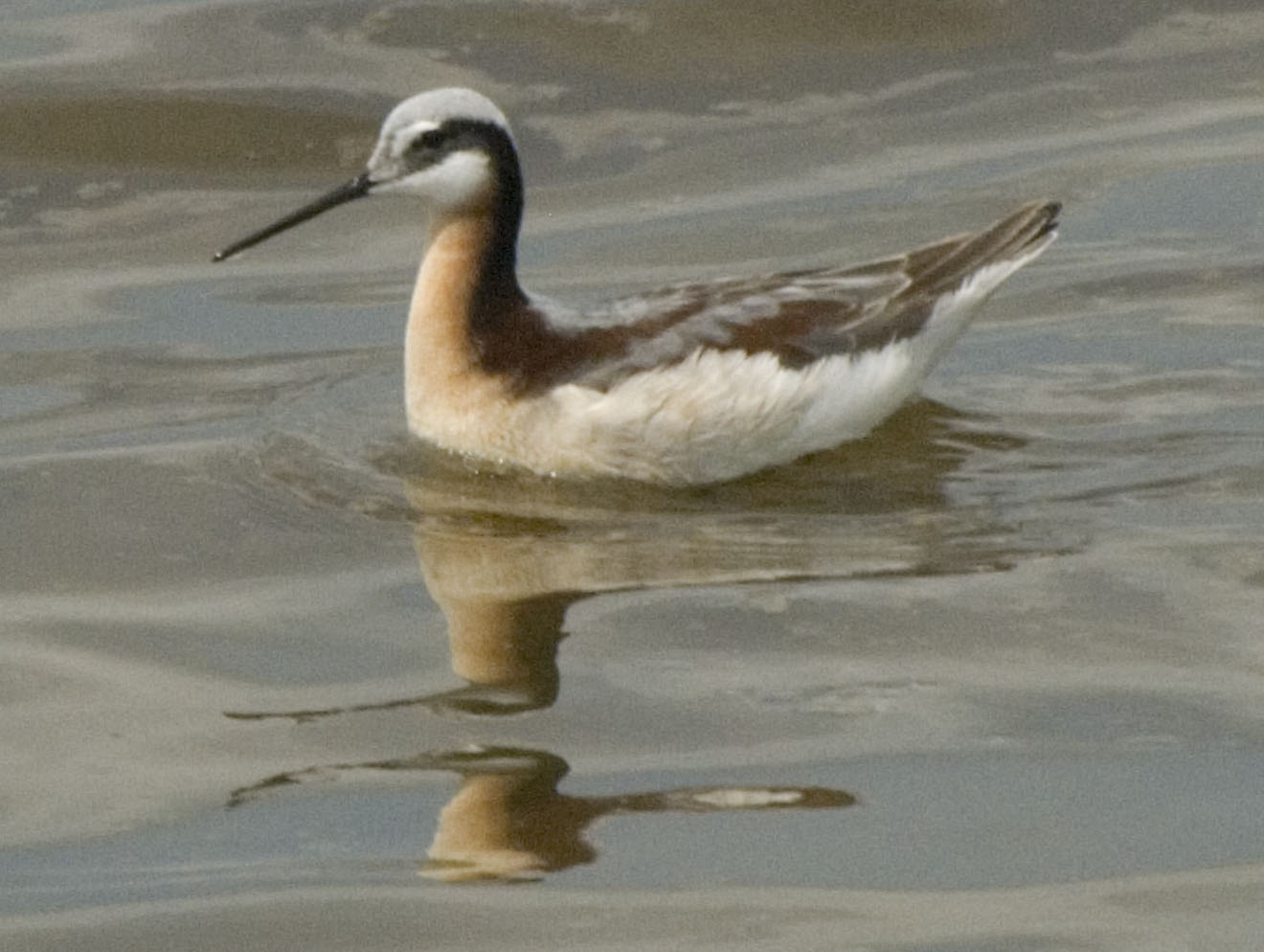 |
| Wilson's Phalarope |
 |
| American Avocet |
 |
| Baltimore Oriole |
 |
| Buff-breasted Sandpiper |
 |
| Black-necked Stilt |
 |
| Burrowing Owl |
 |
| Crested Caracara |
 |
| Dickcissel |
 |
| Eastern Wood Pewee |
 |
| Indigo Bunting |
 |
| Orchard Oriole |
Subscribe to:
Posts (Atom)